Strings & piano
Sonata Hebraica for Viola & Piano (1950)
I Andante
Andrei Dogadin, viola · Pavel Eliashevich, piano · Andrey Dogadin, viola
About this work →Born into the immigrant Lower East Side, trained at Juilliard, pianist to Al Jolson and assistant to Kurt Weill on Broadway, Irving Schlein wrote hundreds of works, few of which were heard in his lifetime. Recorded by musicians of the St. Petersburg Philharmonic, they are now free for everyone to hear.
“Listen now” plays a short introduction, three pieces in a row.
Between the late 1930s and his death in 1986, Irving Schlein wrote 216 catalogued works: fourteen symphonies and symphonic works, five concertos, nineteen orchestral works and two dozen for small orchestra, some forty chamber works for strings and winds, forty pieces for solo piano, twenty-five choral works, and songs, band music, works for narrator and music for early instruments, crowned by Salammbo, a full-length opera after Flaubert.
After Irving’s death, his son Peter Schlein set out to make sure the music would not be lost. He gave every work its ISSM catalogue number, gathered the scores and, between 2001 and 2008, recorded the music in St. Petersburg with principals of the St. Petersburg Philharmonic and professors of the Rimsky-Korsakov Conservatory: 13 albums covering the chamber works, the piano concertos and the symphonies.
When Peter died in 2008, the family carried the work on. Peter’s brother Steve made the connection with Yale, and Peter’s son Oren scanned every manuscript, page by page, before Irving’s papers were placed with Yale University’s Gilmore Music Library. They are preserved there as the Irving Schlein Papers: 24 boxes of manuscripts, writings, letters, programmes and photographs.
This website brings it all together, free for everyone: every work with its history, the recordings, scores and parts to download, print and perform, Irving’s own manuscripts, and his life story and photographs.
Three pieces, chosen afresh each visit. Press play and the music starts right here, in the player at the bottom of the screen.
Schlein played piano for silent movies to pay his way through school. He studied piano with August Fraemcke, one of the last two living students of Franz Liszt, and composition with Aaron Copland, Roy Harris, Wallingford Riegger and Roger Sessions, then spent thirty years on Broadway as musical director, pianist, arranger and composer. A born entertainer, he wrote music full of radiant optimism and energy.


Choose an album to see its tracks and play it.
Browse all 13 albums → ALBUM 01Highlights, Vol. 1
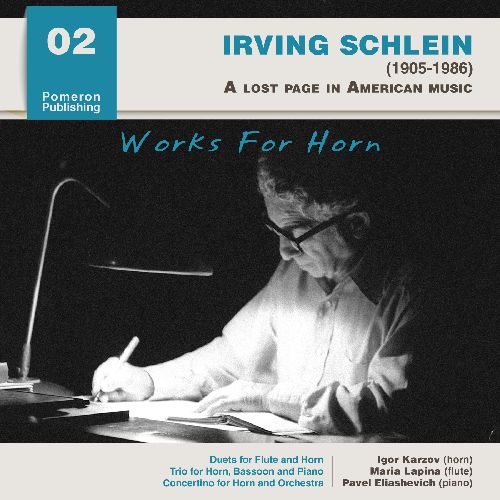 ALBUM 02Works for Horn
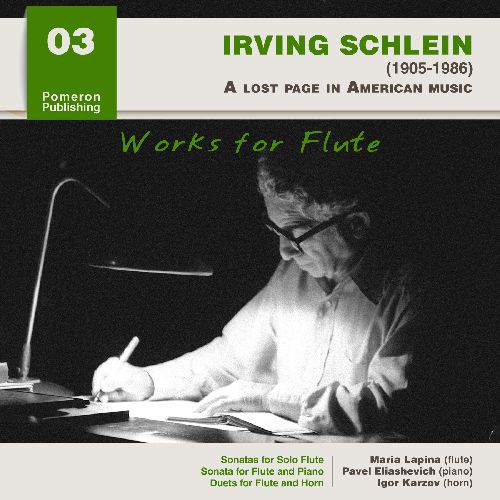 ALBUM 03Works for Flute
 ALBUM 04Sonatas for Strings and Piano
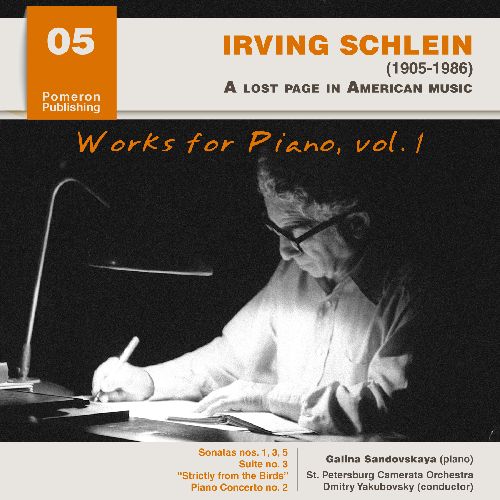 ALBUM 05Works for Piano, Vol. 1
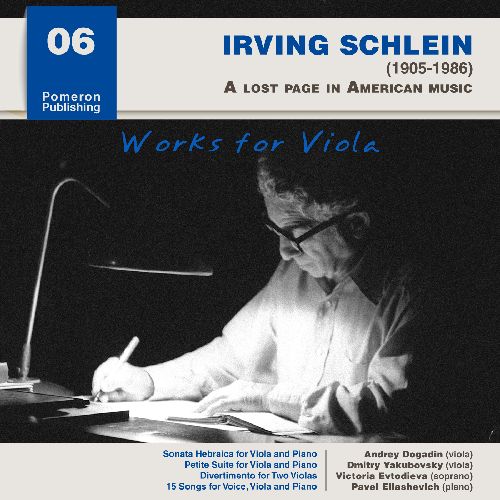 ALBUM 06Works for Viola
 ALBUM 07Works for Clarinet and Oboe
 ALBUM 08Works for Piano, Vol. 2
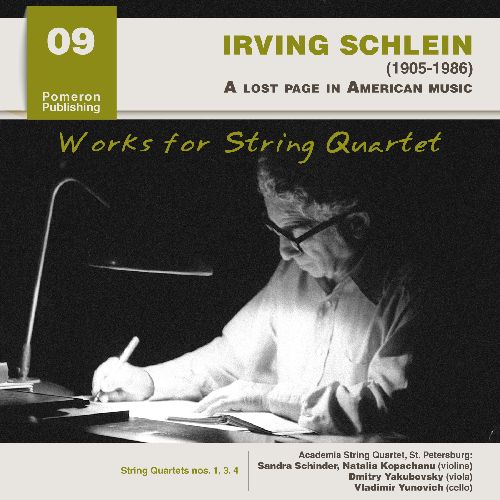 ALBUM 09Works for String Quartet, Quintet and Trio
 ALBUM 10Highlights, Vol. 2
 ALBUM 11Works for Piano, Vol. 3
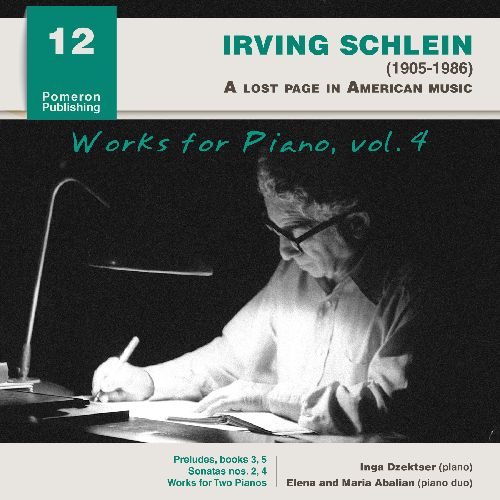 ALBUM 12Works for Piano, Vol. 4
 ALBUM 14Orchestral Works
Piano accompaniments by Irving Schlein © 1965 Oak Publications
In 1965 Irving gave new life to the first great collection of African-American song, writing a piano accompaniment for every one of its 136 spirituals, shouts and work songs. “To bring the Slave Songs out into the light,” he wrote, “to release them from their one-hundred-year imprisonment.”